No items found.
How long does lip filler last? Most hyaluronic acid lip fillers last about 6–12 months, but results vary depending on filler type, injector technique, lip movement, and individual metabolism. This guide explains what actually affects lip filler longevity, what makes it fade faster, and how to plan touch-ups without overfilling.

If you love how your lips look right after filler, the next question is obvious:
How long will this last?
Most lip fillers are hyaluronic acid (HA) fillers, and the typical duration is about 4–12 months, but this depends on the product used and the area treated. The American Academy of Dermatology lists hyaluronic acid gel fillers as lasting 4 to 12 months.
The lips often sit on the shorter end of that range because:
This guide covers:
If you’re in the Albany area, this also helps you decide what to ask in a consultation at The Rejuva Center in Latham or Saratoga Springs.

Most people can expect 6–12 months of visible lip filler results, with lots of people noticing meaningful softening around the 6–9 month mark.
Here’s what changes longevity the most.
Bottom line: product choice + injector skill + your biology decides how long it lasts.
Most modern lip fillers are hyaluronic acid-based gels. HA is a substance your body already makes, which is why HA fillers are temporary.
Over time, your body gradually breaks the gel down. That is normal.
The AAD’s public patient guidance lists HA filler duration as 4–12 months.
At The Rejuva Center’s lip filler page, they describe lip fillers as HA-based injectables and mention commonly used brands like Juvéderm, Restylane, and RHA Collection.
So if someone tells you “it always lasts 18 months on the lips,” treat that as marketing, not a promise.
Every day movement can speed up how quickly filler softens.
You can’t “avoid” this unless you stop using your mouth, so don’t obsess over it. Just plan for it.
Some people break HA down faster than others.
Do we have strong, clean studies that quantify “fast metabolism = X months less filler”? Not really. Most of this is clinical observation and patient patterning.
So the honest claim is:
If filler is placed poorly, it can:
This is why “brand” is less important than injector skill in many outcomes.
Inflammation can lead to swelling, tenderness, and uneven texture. In severe cases, patients want it dissolved early.
Also worth saying clearly:
Vascular occlusion is a rare but serious risk of dermal fillers. The FDA notes the most concerning risk is unintentional injection into a blood vessel, which can cause tissue damage and other severe outcomes.
That does not mean fillers are unsafe. It means training, anatomy knowledge, and emergency readiness is needed.
Smoking impacts skin health and healing.
Direct proof that smoking “dissolves HA faster” is limited. But smoking can:
If you want lips that stay looking good, reducing smoking helps your tissue more than it helps the gel.
This is a sneaky one.
If you top up too early and too often, you can:
Some surgeons warn that topping up too soon can, over time, contribute to an unnatural look.
“Lasting longer” is not the goal if the shape starts drifting.
This matters more than people think.
Your injector is matching:
The Rejuva Center describes using HA fillers such as Juvéderm, Restylane, and RHA Collection.
Different HA fillers behave differently, even if they all dissolve.
For many patients:
Creates better longevity in appearance.
Not because the gel magically lasts longer, but because:
This also reduces the risk of needing early dissolving.
For the first 24–48 hours, sensible aftercare can reduce swelling and irritation:
After that, live normally.
People online push extreme rules. Most of them are nonsense.
This doesn’t slow HA breakdown in a proven way, but it keeps lips looking better as filler softens:
It’s not a filler “hack.” It’s tissue maintenance.
The extremes:
A realistic approach for many patients is a review around 6–9 months, then decide based on:
This is where a good injector saves you from your own mirror.
Be blunt about these:
If someone is selling you a product claiming it “locks filler in,” assume it’s sales copy.
AAD and FDA-style guidance generally frames filler effects like this:
Common and expected:
Less common but urgent:
The FDA highlights the serious risk category around unintentional injection into blood vessels.
If a clinic can’t explain safety protocols clearly, walk away.
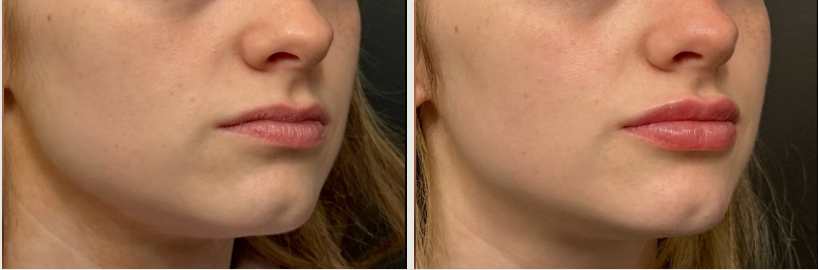
Immediately after
2 weeks
3–6 months
6–12 months
Filler usually doesn’t disappear overnight. It fades in a slow slope.
Pricing varies widely by:
A lower price can cost more later if:
Better to pay for:
If you’re searching for lip filler around Albany, Latham, Clifton Park, Troy, or Saratoga Springs, The Rejuva Center lists two locations:
Their lip filler page describes HA-based fillers and references brands like Juvéderm, Restylane, and RHA Collection.
If you’re deciding between locations, pick based on convenience. The results come down to:
Bring these. They filter out weak providers fast.
If the answers feel vague, that’s your answer.
Hyaluronic acid fillers are commonly described as lasting 4–12 months, depending on the product used and the area treated.
High lip movement, your individual breakdown rate, and technique factors can all contribute. Poor placement can make fading look faster because the shape is less stable.
There’s no strong proof that exercise dramatically shortens HA filler duration. If it makes a difference, it’s usually modest. Don’t stop training for filler.
When performed by trained medical professionals, fillers are widely used and typically safe. But serious complications can occur. The FDA notes that unintentional injection into a blood vessel is the most concerning risk category.
If you want lip filler that:
Book a consultation at The Rejuva Center in Latham or Saratoga Springs to get an anatomy-based product selection, a realistic longevity estimate, and a maintenance plan that avoids “pillow lip” creep
Book Now