No items found.
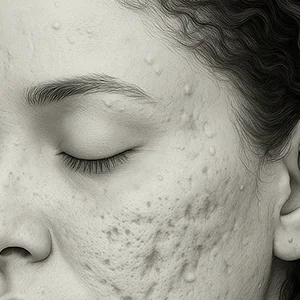
Acne scars vary in depth and structure, which is why treatment must be scar-specific. This guide explains icepick, boxcar, and rolling scars, why they form, and which treatments are most effective based on scar type and skin condition.

Acne scars affect skin structure long after breakouts are gone. While skincare can support overall skin health, scarred tissue requires targeted treatment to improve texture and stimulate collagen.
At Rejuva Center at The Williams Center in Albany, acne scar treatment plans are built around scar type, skin condition, and long-term skin health. This approach avoids one-size-fits-all solutions and focuses on measurable improvement over time.
Acne scars develop when inflammation disrupts collagen during the healing process. The American Academy of Dermatology explains that deeper or prolonged inflammation increases the likelihood of permanent scarring.
Once collagen is damaged, the skin heals unevenly. This leads to textural changes that topical products alone cannot correct.
Most acne scars fall into three categories. Many patients have more than one type, which is why careful assessment is essential.
Icepick scars are narrow, deep depressions that extend into the dermis.
Why they are difficult to treat
At Rejuva Center at The Williams Center, icepick scars are evaluated carefully to determine whether microneedling or RF microneedling can improve surrounding texture as part of a broader treatment plan.
Boxcar scars are wider depressions with defined edges, often found on the cheeks or temples.
Why they respond well to treatment
Microneedling and RF microneedling are commonly used at Rejuva Center at The Williams Center to soften the edges of boxcar scars and improve overall skin smoothness over time.
Rolling scars create a wave-like appearance due to fibrous bands pulling the skin downward.
Why they benefit from deeper treatments
RF microneedling is often recommended at Rejuva Center at The Williams Center for rolling scars because it targets deeper layers where tethering occurs, supporting collagen remodeling over a series of sessions.
There is no single best acne scar treatment for everyone. Different scar types respond to different methods.
At Rejuva Center at The Williams Center, treatment planning considers:
This structured approach helps avoid unnecessary treatments and focuses on steady improvement rather than short-term fixes.
Microneedling creates controlled micro-injuries that trigger the skin’s natural repair process.
Best for:
Microneedling is frequently used at Rejuva Center at The Williams Center for patients who want visible improvement with minimal downtime.
RF microneedling adds heat to the microneedling process, allowing energy to reach deeper layers of the skin.
Benefits:
This treatment is often recommended when standard microneedling alone is not sufficient.
Acne scar treatments improve texture and skin quality. They do not completely eliminate scars.
Most patients treated at Rejuva Center at The Williams Center experience:
Results depend on scar type, consistency of treatment, and individual healing.
For patients in Albany, in-person scar assessment is especially important because acne scars often involve multiple scar types that require different treatment depths.
A consultation at Rejuva Center at The Williams Center allows providers to:
The best acne scar treatment depends on the type of scars present.
Microneedling and RF microneedling play an important role in many acne scar treatment plans when used appropriately..
A consultation at Rejuva Center at The Williams Center can help determine which options are best suited to your skin and goals.
Book a consultation